


In recent years, with the growth of creative industries and small workshops, hourglass production in Iran has flourished. These products are generally divided into two main categories:
- Decorative and ornamental hourglasses – usually made of glass, wood, and colored sand, used as decoration in homes and cafés.
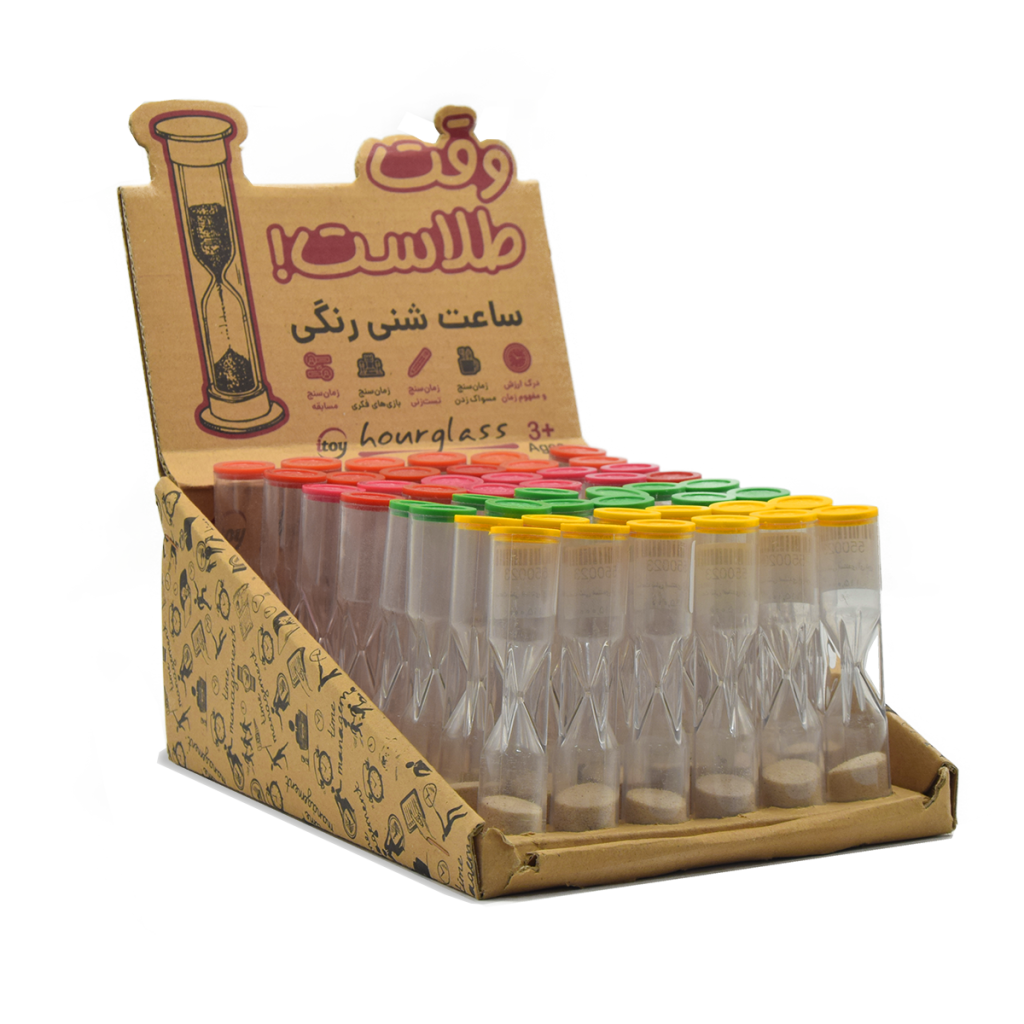
- Educational and toy hourglasses – mainly made of durable plastic to ensure safety and lightness for children.
At iToy, we operate the most efficient and fastest hourglass production line in Iran.
The production process includes the following stages:
- Designing the body and creating molds (using plastic injection or glass forming).
- Selecting the type of sand (usually fine, dried, or colored silica sand).
- Assembling and sealing the two chambers.
- Controlling the flow time of the sand to determine a specific duration (in minutes or seconds).
One of the most valuable uses of hourglasses is teaching the concept of time to children.
At an early age, children do not yet understand the numerical concept of time (minutes, hours), but by watching the sand move from top to bottom, they begin to feel the passage of time.
Educational uses of hourglasses for children:
- Learning order and time management (e.g., 5 minutes for brushing teeth or playing).
- Increasing focus when doing time-limited activities.
- Understanding the concept of patience and waiting.
- Sensory experience of time passing through the movement of sand.
Kindergarten teachers often use colorful plastic hourglasses in group games or time-based learning, as they are both safe and intuitive for a child’s understanding.


0 Comments